



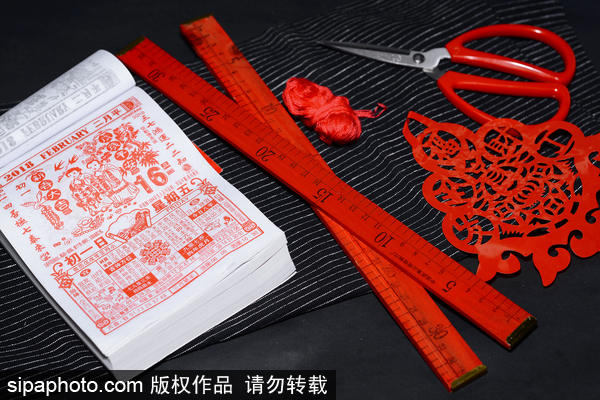
People use calendars to mark the coming and going of seasons (季节,jì jié) and years. The Chinese lunar calendar (农历/阴历,nóng lì /yīn lì) is just one of several used around the world today.
Officially, China starts its years on January 1 and ends on December 31 on the Gregorian calendar (公历,gōng lì). It’s simply more convenient (方便,fāng biàn) to do business with the rest of the world if you’re all in sync.
But the Spring Festival (春节,chūn jié) marks the start of the year of a different sort. It’s based on the Chinese Lunar Calendar, which follows the cycles of the moon and is still used to determine holidays (假期,jià qī) that are celebrated in China and many other parts of the world that trace their culture to ancient Chinese history.
Farmers (农民,nóng mín) in many parts of the country also still use the calendar to plan when to put seeds in the ground (播种,bō zhǒng) for optimal harvests (收成,shōu cheng).
And based on dates that are considered lucky (吉利,jí lì), couples plan their weddings and millions around the world make financial decisions (财务决定,cái wù jué dìng), big and small.
There are 350 or so days in a Lunar Calendar Year, but it takes the Earth 365 and a quarter days to go around the sun. To square the difference, the Lunar Calendar uses so-called intercalary months (闰月,rùn yuè).
Think Leap Years (闰年,rùn nián), but instead of an additional day at the end of every four Februarys, a whole month is added every two or three years.
Key words & phrases
收成:crop; harvest
shōu cheng bù hǎo
收成不好
have a poor harvest
jīn nián xiǎo mài shōu cheng jiāng chuàng jì lù
今年小麦收成将创纪录。
This year's wheat crop will set a new record.
If you have any problems with this article, please contact us at app@chinadaily.com.cn and we'll immediately get back to you.


